
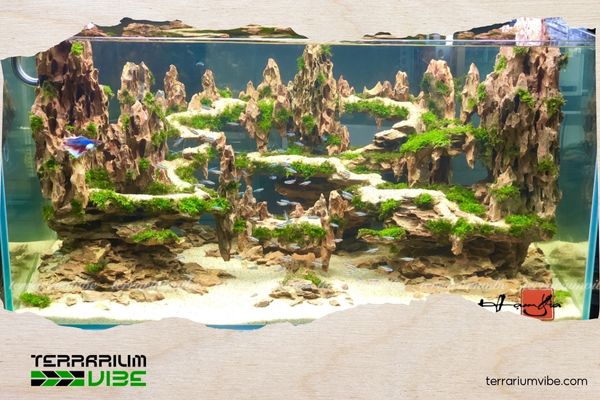
5 Common Mistakes in Aquascape Rock Layout and How to Avoid Them

Aquascape rock layout is one of the most important elements in shaping the style and aesthetic of a planted aquarium. However, creating a well-balanced rock composition isn’t always easy—especially for beginners. In this article, Terrarium highlights the most common mistakes in aquascape rock layout and offers practical solutions to help you achieve a natural, cohesive, and long-lasting design.
Why Aquascape Rock Layout Matters
A well-executed aquascape rock layout does more than structure the space—it adds visual depth and emotional resonance to the entire setup. Rocks guide the viewer’s eye, anchor plant growth, and help create a stable environment for aquatic life. Far from being mere decoration, rock placement is the foundation of a successful and balanced aquascape.
Common Mistakes in Aquascape Rock Layout
Even with the best intentions, many aquascapers fall into common traps that can compromise both aesthetics and tank stability. Let’s explore the most frequent mistakes—and how to avoid them.
Choosing the Wrong Type of Rocks
A common mistake among hobbyists is selecting rocks based solely on appearance, without considering their chemical properties. Some types of rock can alter the pH or hardness of the water, potentially harming plants and fish.

Chọn loại đá không phù hợp
To avoid this, choose aquascaping-approved stones like Seiryu stone, Dragon stone (Ohko stone), or lava rock. These materials are chemically stable and widely trusted in aquascape communities for maintaining safe water parameters.
Using a Symmetrical Layout
Many beginners instinctively arrange rocks symmetrically to achieve balance, but this often results in a rigid, unnatural look. Perfect symmetry in an aquascape rock layout can make the composition appear artificial and uninspired.
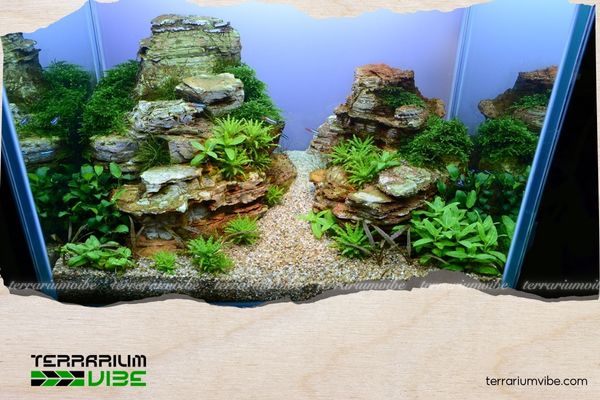
Sắp xếp theo bố cục đối xứng
Instead, apply compositional principles such as the golden ratio, rule of thirds, or the minimalist Iwagumi layout. These techniques help you create intentional asymmetry, leading to a more dynamic and natural aquascape.
Overcrowding with Too Many Rocks
Another frequent issue is overloading the tank with decorative stones. While it might seem like more rocks create more structure, it often results in a cramped, cluttered environment with little room for plant growth or fish movement.
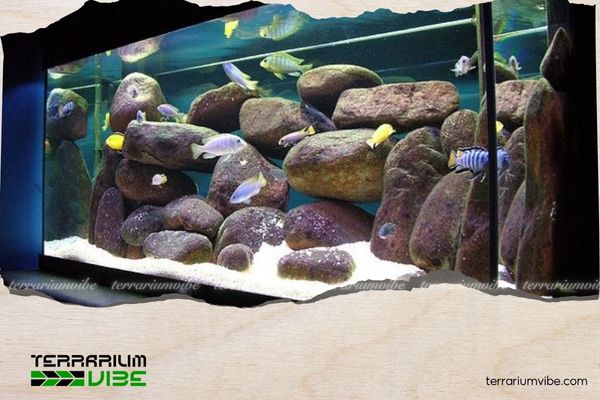
Overcrowding with Too Many Rocks
The ideal approach is to focus on one main or “hero” rock, then arrange supporting stones around it in a way that complements the overall direction. Leave open spaces to allow your aquascape rock layout to “breathe,” creating visual contrast and balance.
Not Securing the Rocks Properly
Neglecting to fix rocks securely is a technical mistake that can lead to serious consequences. Loose stones can shift or collapse due to strong water flow or fish activity, endangering the layout and tank inhabitants.

Not Securing the Rocks Properly
To prevent this, use aquarium-safe adhesive or interlocking structures when building your layout. Always test the stability of rock groupings before filling the tank to ensure the aquascape remains intact over time.
Lack of Visual and Conceptual Cohesion
One subtle yet impactful mistake is failing to create a cohesive visual narrative within the rock layout. When stones are placed without consistent direction, angle, or intent, the aquascape feels disjointed and shallow.
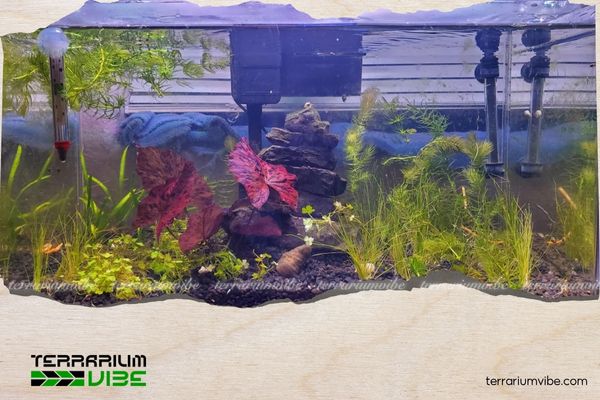
Lack of Visual and Conceptual Cohesion
To build cohesion, imagine a natural scene—like a mountain ridge, flowing stream, or hillside slope—and arrange the rocks to reflect that vision. A well-composed aquascape rock layout should have a visual flow and “story” that connects all elements into a unified whole.
We hope this guide from Terrarium helps you recognize and avoid common pitfalls in aquascape rock layout. A thoughtful, well-balanced layout not only elevates the aesthetic of your tank but also ensures a stable, thriving aquatic environment. With knowledge and creativity, your aquascape can become a true reflection of nature’s beauty.