



What Is Dutch Style Aquascaping? Common Mistakes to Avoid When Designing a Dutch Aquascape

In the diverse world of aquascaping, where nature and creativity collide, Dutch style aquascaping stands out as one of the oldest and most visually captivating styles. If you’re fascinated by lush aquatic plant layouts that resemble well-manicured gardens more than wild nature, this article by Terrarium will walk you through everything you need to know about the Dutch style—and the common pitfalls to avoid.
What is Dutch Style Aquascaping?
Dutch style aquascaping originated in the Netherlands in the 1930s and is one of the oldest forms of planted aquarium design. Unlike Iwagumi (which emphasizes rocks) or Nature Aquarium (which mimics natural landscapes), Dutch aquascaping focuses entirely on plants—specifically, the art of arranging them by color, shape, and height to create structured underwater gardens.
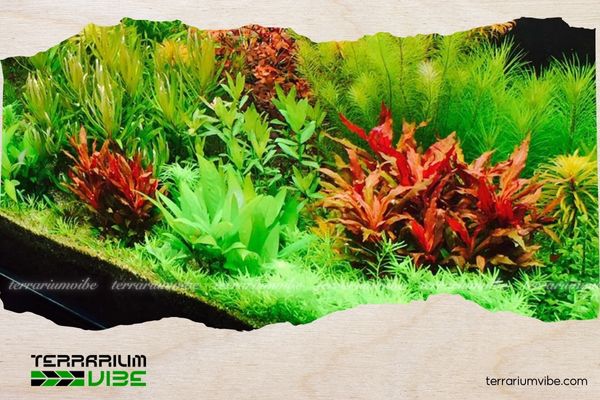
Detailed View of Plant Grouping in a Dutch Aquascape
These aquascapes resemble colorful, well-manicured underwater gardens, where plants are carefully grouped in tiers and clusters. The design avoids clutter and follows the golden ratio or rule of thirds for visual harmony. You won’t see rocks or driftwood here—the spotlight belongs solely to the plants.
Key Features of Dutch Style Aquascaping
To truly appreciate the uniqueness of this style, here are its defining characteristics:
- Plants Take Center Stage: In Dutch Style Aquascaping, terrarium plants are the stars. Every detail revolves around the thoughtful placement of foliage to create visual appeal.
- Golden Ratio & Rule of Thirds: These mathematical principles are often applied to create visual balance and depth, leading the viewer’s eye to focal points in the layout.
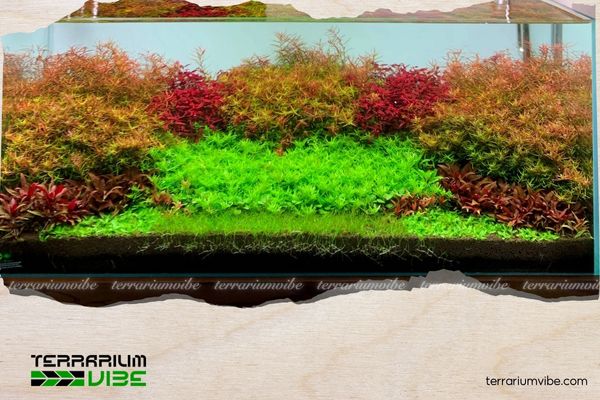
Detailed View of Plant Grouping in a Dutch Aquascape
- Diverse Colors and Shapes: A beautiful Dutch-style tank features a rich palette—greens, reds, purples—interspersed with broad, narrow, round, or needle-like leaves. Contrast and variation bring life and depth to the aquascape.
- No Rocks or Driftwood: This style completely avoids hardscape elements. Unlike many other layouts, the beauty here is achieved solely through plants.
Who Is Dutch Style Aquascaping For?
If you’re someone who enjoys planning, organizing, and working with a wide variety of aquatic plants, this style may be perfect for you. It’s especially suited for aquascapers who:
- Prefer a more formal and structured aesthetic
- Appreciate high plant density and variety
- Are detail-oriented and enjoy regular tank maintenance
- Have intermediate to advanced knowledge—or are enthusiastic beginners ready to dive in
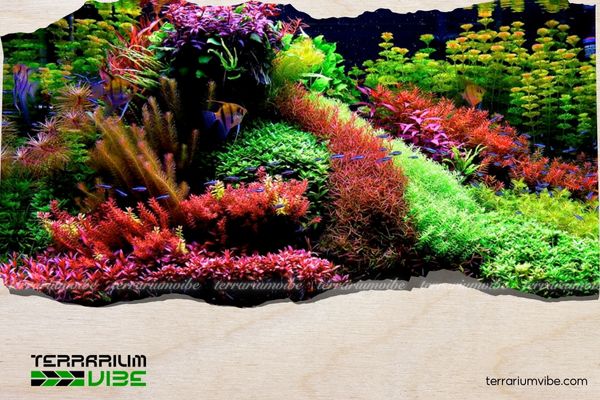
Dutch Aquascaping for Passionate Aquarists
That said, Dutch aquascaping does require significant investment in terms of time, equipment, and knowledge. Strong lighting, CO₂ injection, and nutrient-rich substrates are essential for maintaining healthy, vibrant plant growth.
Common Mistakes to Avoid
While Dutch aquascaping is stunning, it’s not easy to master. Here are some typical missteps you’ll want to steer clear of:
- Using Too Many Plant Species
While variety is encouraged, randomly choosing plants without a visual plan can lead to chaos and dilute the design’s impact. - Inadequate Lighting and CO2
These tanks demand strong lighting and consistent CO2 injection. Without them, plants may struggle, fade in color, or even die. - Ignoring Layout Principles
Planting without structure or tiers takes away from the core essence of the Dutch style. Always define layers and groupings. - Overusing Red Plants
Red plants add drama and focal points—but too many can overwhelm the layout and disrupt balance. Use sparingly and strategically.
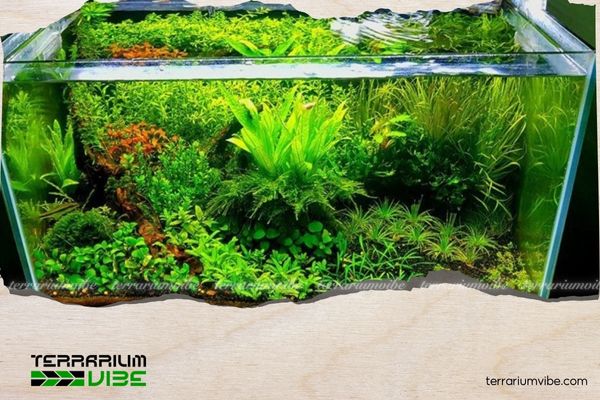
Avoid These Mistakes in Your Dutch Aquascape Design
We hope this guide from Terrarium gives you a deeper understanding of Dutch style aquascaping. While it requires thoughtful planning and care, the reward is a breathtaking underwater garden—full of color, balance, and botanical beauty.