


Top 5 Most Popular and Beautiful Types of Aquascaping Rocks for Planted Tanks

Types of aquascaping rocks play a central role in shaping layouts, creating focal points, and maintaining biological balance in planted tanks. Choosing the right rocks not only makes the aquarium look natural but also supports the development of beneficial bacteria and provides shelter for fish and aquatic organisms. Let’s explore with Terrarium!
The Role of Types of Aquascaping Rocks
Types of aquascaping rocks are not merely decorative elements—they form the “backbone” of an aquascape layout. For those who follow styles like Iwagumi or Nature Aquarium, they represent miniature natural landscapes.
The Role of Types of Aquascaping Rocks
Rocks help create elevation, depth, and spatial separation in the tank. In addition, some rocks assist in water buffering and provide ideal surfaces for beneficial bacteria—key components of a healthy ecosystem
Commonly Used and Beautiful Types of Aquascaping Rocks
There are many types of aquascaping rocks on the market today, but not all are suitable for a stable aquatic environment. Below are the most widely used and visually impressive rocks, trusted for their aesthetics and compatibility.
Dragon Stone (Ohko Stone)
Dragon Stone, or Ohko Stone, is one of the most beautiful and popular types of aquascaping rocks. With its reddish-brown tone and porous structure, it brings a wild and mountainous feel to the aquarium.
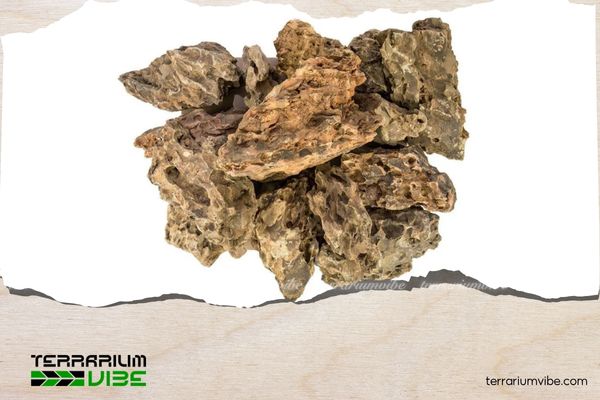
Dragon Stone (Ohko Stone)
Lightweight and easy to arrange, Ohko Stone doesn’t affect pH or hardness, making it ideal for beginners. When paired with low-growing aquatic plants like dwarf baby tears, moss, or dwarf hairgrass, the layout becomes vivid and harmonious.
Lava Rock
Lava Rock is a volcanic-origin rock with a porous surface and dark color (black or deep red). One of the most functional types of aquascaping rocks, it provides abundant surface area for beneficial bacteria.

Lava Rock
This helps improve water quality and enhances biological filtration. Lava rock is used in both substrate and layout structures—especially in shrimp tanks or low-tech setups—thanks to its neutral impact on water chemistry.
Sedimentary Rock
Sedimentary rocks come in diverse shapes and natural colors like earth yellow, reddish-brown, or ash gray. Formed through the accumulation of natural minerals, they bring a rustic and authentic appearance to the tank.
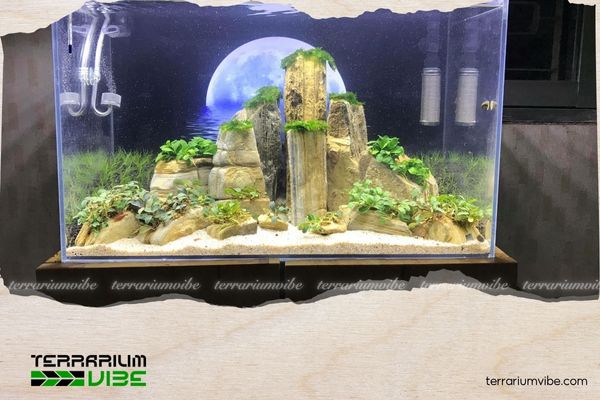
Sedimentary Rock
When arranged cleverly, sedimentary rocks create a layered terrain effect—perfect for mountain or cave-style layouts. Among the many types of aquascaping rocks, this is a great choice for aquascapers who prefer a natural but not overly rugged style.
Quartz (Chert)
Quartz, or Chert, is known for its high hardness and white to translucent color. Its standout feature is its chemical inertness—it does not dissolve or react in water, making it extremely safe for planted aquariums.

Quartz (Chert)
Though rarely used as a primary rock, it works well as an accent or in substrate, adding sparkle and elegance—ideal for minimal and clean layouts. It’s one of the safest types of aquascaping rocks available.
Slab Stone (Flat Green Rock)
The final rock in this top 5 list of types of aquascaping rocks is Slab Stone, also called flat green rock. It features thin, flat shapes with sharp edges, ideal for building rock walls or simulating narrow valleys.

Slab Stone (Flat Green Rock)
Its gray-green tone pairs well with bright substrate or red plants, creating strong contrast. Chemically stable and easy to work with, Slab Stone suits aquascapers who favor depth and structured layouts.
Choosing the right types of aquascaping rocks is a crucial first step in your aquascaping journey. Each rock type has its own personality and matches different design intentions. Terrarium wishes you success in finding the perfect rocks for your setup!