


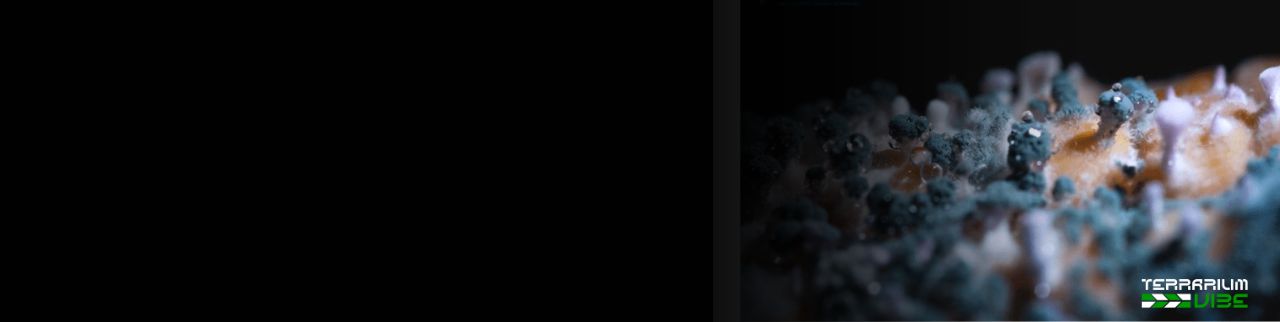
Mold in Terrarium – How to get rid of and prevent mold in terrariums

Mold is a common issue that many Terrarium enthusiasts, especially newcomers, encounter. While Terrariums are beautiful and offer numerous benefits, they are not immune to problems during care, notably mold growth. In this article, Terrarium Vibe will provide you with information on the causes of mold, common types of mold, and effective prevention and treatment methods.
Mold in Terrariums – the Ever-Present Foe
Hello Terrarium enthusiasts!
When it comes to Terrariums, we know that creating a complete Terrarium involves several stages. However, caring for a terrarium also requires meticulous attention because things don’t always go as planned and depend on managing light, temperature, humidity, and space. However, during the care process, dealing with mold in a terrarium is inevitable.
Mold, or mildew, is a common term referring to various harmful types of fungi that can develop on different surfaces. Mold requires moisture to grow, and the moist environment of a terrarium provides the perfect host. Mold spreads by releasing spores into the air, which then settle in suitable locations to grow and thrive. So, now you understand what mold is in general, right?

Next, Terrarium Vibe will share with you some extremely useful information to help you ‘defeat’ mold and protect your miniature garden. First, let’s understand the impact of mold on terrariums so that beginners can have a clearer understanding.
How does mold affect the Terrarium?
Terrariums – enchanting miniature gardens with lush greenery, harboring intense vitality. However, one day we may panic when the uninvited guests – mold – appear, disrupting the perfection of the tiny garden. First, you need to know about the specific harms of mold to the Terrarium:

- Extremely aesthetically displeasing when looking at your terrarium
Mold appears in the form of white, black, green, or brown spots on leaves, branches, moss, and substrate, detracting from the inherent beauty of the Terrarium. A Terrarium affected by mold becomes less attractive, affecting the experience and enjoyment of the player.
- Harmful to the plant species in the terrarium
Mold competes with plants for nutrients and water, causing them to become weak and stunted in growth. Mold can spread to other healthy plants in the Terrarium, causing disease and affecting the entire garden
- Creating an environment for the growth of other diseases
Mold creates a moist environment, favorable for the growth of other diseases such as bacteria, fungi, and insects. This makes the Terrarium susceptible to attacks by other diseases, posing a danger to the health of the plants.
Some types of mold can be harmful to human health, especially those with weakened immune systems. Inhaling mold spores can lead to symptoms such as allergies, coughing, sneezing, difficulty breathing, and even pneumonia
- It can even be harmful to our own health.
Mold negatively affects the Terrarium in many ways, from aesthetic loss, harming plants, creating an environment for disease growth to affecting human health. So what causes mold to appear in our terrariums? Let’s continue to explore the causes of this condition!
Causes of mold in terrariums
The care process is extremely important, and sometimes you may overlook small factors that actually lead to mold in the terrarium without realizing it. Terrarium Vibe will address the causes of this type of mold growth in terrariums, so let’s see if we’ve missed any care steps!

- Inappropriate humidity: This is the primary and most common cause of mold in terrariums. A closed environment, poor ventilation, and excess water provide ideal conditions for mold growth.
- Overwatering: Overwatering is a direct cause of high humidity in the terrarium.
- Lack of light: Light plays a crucial role in the process of photosynthesis, helping plants grow healthily and limiting mold growth. Therefore, when there is insufficient light, plants cannot carry out photosynthesis properly, resulting in the weakening and gradual death of the plants
- Soil quality and plants: Dirty, non-sterilized soil or diseased plants may contain mold spores, which can spread throughout the entire terrarium.
- Vệ sinh chưa đúng: Vệ sinh Terrarium không tốt cũng là nguyên nhân dẫn đến nấm mốc. Cặn bẩn, lá cây rụng và xác động vật chết là môi trường thuận lợi cho nấm mốc sinh sôi.
Additionally, there are several other factors that may contribute to the growth of mold in the Terrarium
- High Temperature: Mold thrives best within the temperature range of 30°C to 35°C.
- Poor Ventilation: A sealed terrarium can easily lead to poor airflow, providing favorable conditions for mold growth.
- Using Inappropriate Decorative Materials: Some decorative materials such as pebbles, stones, and bark may contain mold spores. Be sure to choose sterilized decorative materials.
Above are the common causes that we often encounter during the terrarium care process. Will you hesitate when you intend to play with terrariums? Don’t worry, because knowing the causes as well as how to care for terrariums that we introduced in the previous article, we can completely create a safe and beautiful living environment for our terrariums.
Các loại nấm mốc thường gặp trong terrarium
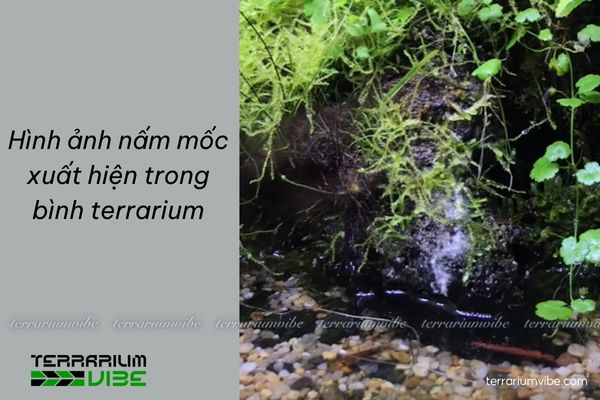
Below are some common types of mold often found in Terrariums:
White Mold (Aspergillus & Penicillium): The most common type of mold in Terrariums. It is white or gray in color. Grows rapidly on various surfaces, including soil, plants, and decorative materials. Can cause respiratory issues, allergies, and skin infections.
Black Mold (Cladosporium & Alternaria): Black or dark brown in color. Grows slower than white mold. Typically appears on plant leaves and branches. Can cause respiratory issues and allergies.
Pink Mold (Fusarium): Pink or orange in color. Grows on soil and plant roots. Damages the plant root system, causing the plants to weaken and die.
Slime Mold (Rhizopus): White or gray, slimy in texture. Grows rapidly on decomposing organic materials, causing harm to the plants.
Gray Mold: Covers leaves with a gray layer, indicating decay.
Powdery Mildew: Creates green, yellow, brown, or purple spots on leaves.
Preventing Mold in Terrariums with the Following Considerations
Understanding the causes of mold growth, next, I’ll guide you on effective prevention strategies:
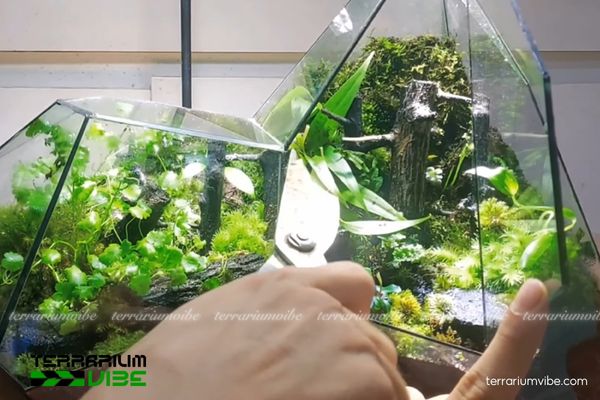
Prevent Terrarium Mold with the Following Guidelines:
- Use Clean and Sterilized Soil: Mold can thrive in contaminated soil. Therefore, opt for clean and sterilized soil when planting in your terrarium to mitigate mold growth.
- Select Healthy, Disease-Free Plants: Diseased plants can serve as carriers for mold, potentially spreading it to other plants within the terrarium. Hence, prioritize healthy, disease-free plants.
- Water Sparingly, Avoid Overwatering: Maintain soil moisture by watering conservatively, ensuring it remains damp but not excessively wet.
- Ensure Adequate Ventilation: Proper airflow within the terrarium helps regulate humidity levels, deterring mold proliferation. Position the terrarium in a well-ventilated area or periodically open its lid to encourage air circulation.
- Regular Debris Removal: Routinely clear fallen leaves and organic debris, which can harbor mold spores and facilitate their growth.
- Employ Fungicidal Treatments as Necessary: Should mold develop, consider employing fungicidal solutions for remediation. Prioritize products safe for both human and pet exposure
Additionally, you can consider the following tips:
- Use drainage stones to improve soil drainage.
- Plant moisture-loving species to help regulate humidity levels in the terrarium.
- Utilize a mini fan to enhance air circulation within the terrarium.
- Place the terrarium in a well-lit area to facilitate photosynthesis and reduce humidity.
The Procedure for Dealing with Mold in a Terrarium
Here’s Terrarium Vibe’s insider tips on dealing with mold in your terrarium:
Mold Removal
Utilize cotton swabs, paper towels, or specialized implements (such as tweezers, knives, or scissors) to eliminate the mold. Choose tools suitable for the size and location of the mold.
How to do:
- For mold on the surface: Gently wipe away the mold with a paper towel or cotton swab.
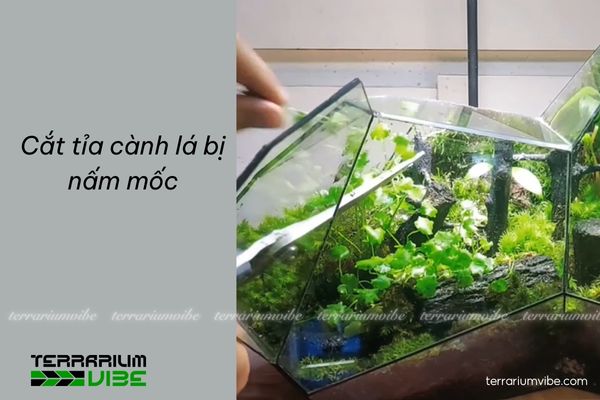
- For mold clinging to branches and leaves: Use specialized tools to cut away the mold-infested branches and leaves. Cut close to the plant stem to prevent mold recurrence.
- For mold adhering to the substrate: Use specialized tools to remove the mold-infested substrate. Be careful not to disturb the plant roots.
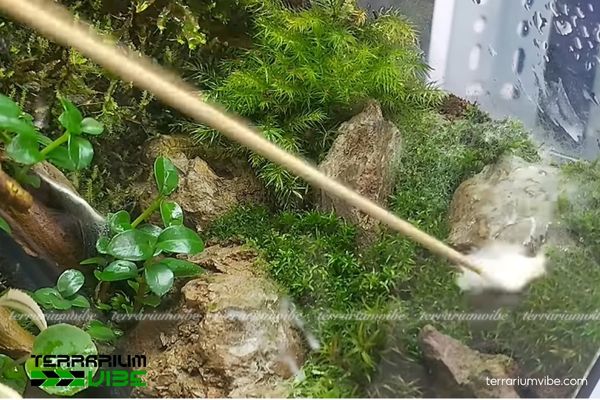
Trim and prune mold-infested branches and leaves in your terrarium.
To prevent the spread to other parts of the plant and neighboring plants within the terrarium, carefully follow these instructions for excising mold-afflicted branches and leaves:
- Employ specialized tools such as knives or shears to excise mold-afflicted branches and leaves.
- Make precise cuts near the plant’s stem to thwart mold resurgence.
- Discard the affected branches and leaves into a sealed trash receptacle.
Khử trùng bình Terrarium
Disinfection helps eliminate mold spores and prevents mold from recurring. Proceed as follows:
- Thoroughly wash the Terrarium with diluted soap water or a mild disinfectant solution.
- Use a soft brush to scrub the corners and crevices inside the Terrarium.
- Rinse thoroughly with clean water and allow to dry completely before use
Changing the substrate
To remove moldy substrate and provide a fresh environment for your terrarium plants:
- Completely remove the old substrate from the Terrarium.
- Select the new substrate that drains well and is suitable for the plant species.
- Add the new substrate to the Terrarium and replant the vegetation.
Adjusting humidity
Reduce the humidity in the Terrarium to limit the growth of mold. Here’s how to do it:
- Water less frequently and only when necessary.
- Regularly open the Terrarium lid to enhance ventilation.
- Utilize moisture-absorbing materials such as pebbles, rocks, or activated charcoal
Adjusting the light appropriately
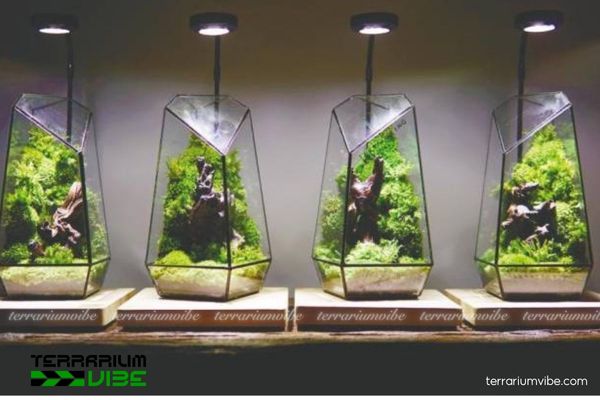
Light: 6-8 hours per day, providing adequate and proper angle illumination. Utilize LED lights, as well as lights specifically designed for terrariums. For natural light supplementation, place the terrarium near a window with indirect sunlight, and divide the lighting time into multiple intervals to avoid overheating from direct sunlight exposure.
Utilize other methods to eradicate mold
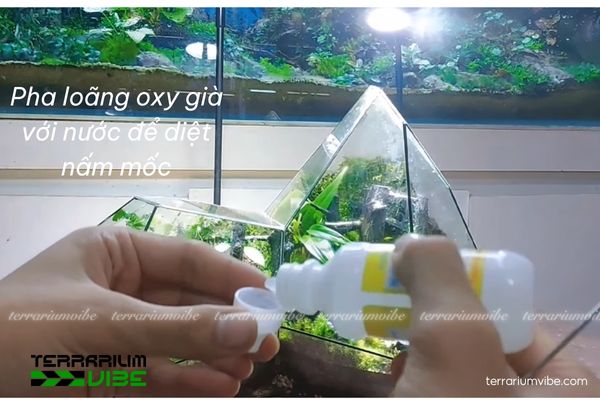
- Hydrogen Peroxide: Dilute hydrogen peroxide with water in a 1:1 ratio and spray it onto the moldy area.
- Fungicidal Solution: Use a fungicidal solution according to the instructions on the packaging.
- Cinnamon: Sprinkle cinnamon powder onto the moldy area.
- Baking Soda: Mix baking soda with water to form a paste and apply it to the moldy area.
Lưu ý:
- Use mold removal methods that are safe for humans and animals.
- Wear gloves and a mask when handling mold.
- Test mold removal methods on a small area before applying them to the entire terrarium.
With these detailed instructions, we hope you can effectively address mold issues in your terrarium.
Wishing you success! And last but not least, be sure to refer to the considerations when dealing with moldy terrariums:
Considerations When Dealing with Moldy Terrariums
In the process of planting and tending to your terrarium, if you observe any signs of mold, it’s crucial to consider the following for timely intervention:
Address mold issues promptly: Mold can proliferate swiftly within enclosed environments like terrariums. Hence, addressing mold problems as soon as they arise is essential to prevent their spread to other plants and potential harm to the terrarium.
Employ plant-safe mold control measures: Certain mold control methods may pose risks to plants. Therefore, opt for safe approaches that are suitable for the specific plant species in your terrarium. Natural remedies like hydrogen peroxide, baking soda solutions, or cinnamon are preferable choices.
Regularly monitor the terrarium for timely mold detection and management: Mold recurrence is possible even after treatment. Hence, consistent monitoring of the terrarium is vital to promptly identify and manage mold issues.
This article by Terrarium Vibe offers detailed insights and guidance on preventing and managing mold in terrariums. We trust that you’ll effectively tackle mold concerns in your terrarium, ensuring its vibrancy and lushness.
For further terrarium care insights, feel free to explore additional articles on Terrarium Vibe. Wishing you success in your terrarium endeavors!