


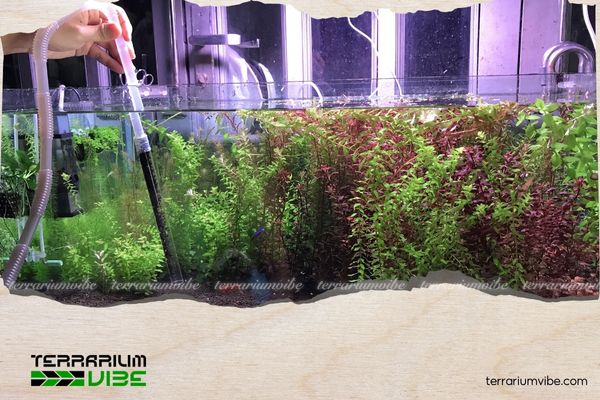

It’s not uncommon for aquascaping beginners to feel confused or even frustrated with a cloudy newly set up aquascape. Don’t worry—Terrarium Vibe is here to break down the most common causes and show you exactly how to clear things up, so your aquascape stabilizes and thrives in no time.
Why Does a Newly Set Up Aquascape Get Cloudy?
A cloudy newly set up aquascape is a common issue and can stem from a variety of sources. Understanding these causes is the first step to effective treatment:
- Unestablished beneficial bacteria: In the early stages, the biological filtration system is still immature. Without enough beneficial bacteria to break down organic waste, the water can become cloudy.
- Dust from substrate and hardscape materials: If you’re using nutrient-rich soil or decorative elements that weren’t thoroughly rinsed before placement, fine particles may cloud the water.

Causes of Cloudy Newly Set up Aquascape
- Excess algae or bacterial bloom: High light intensity combined with excess nutrients can cause algae or bacterial blooms, turning the water green or milky.
- Leftover food and organic waste: Overfeeding fish or failing to remove uneaten food can lead to organic decay, which contributes to cloudy water.
How to Clean a Cloudy Newly Set up Aquascape
So how to handle a cloudy newly setup aquascape effectively? Here are several effective methods to deal with cloudy water after setting up your aquascape:
1. Fix Cloudiness Caused by Substrate Dust
One of the most common culprits behind a cloudy newly set up aquascape is dust from the substrate, especially when using enriched soil mixes or industrial aquascaping substrates. To minimize this:
- Always rinse substrate thoroughly before adding it to your tank.
- Avoid disturbing the substrate too much during layout and planting.
- Use fine filter floss or sponge media to capture suspended particles.
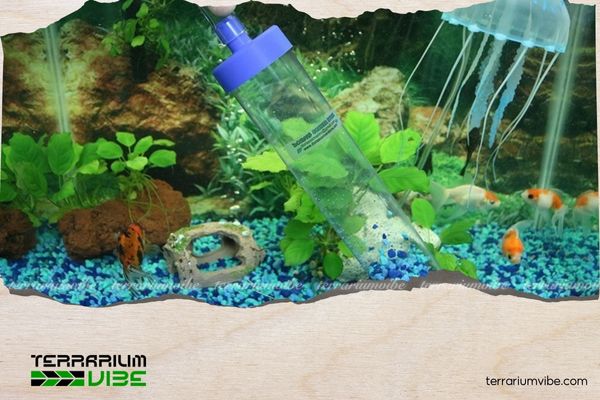
Rinsing Aquascaping Soil Before Tank Setup
2. Boost Biological Filtration with Beneficial Bacteria
During the initial cycling phase, your tank’s bacterial colony isn’t strong enough to handle the organic load. That’s the reason for a cloudy newly set up aquascape. This is the perfect time to introduce beneficial bacteria to kickstart your system.
- Use products that contain Nitrosomonas and Nitrobacter strains—essential for establishing the nitrogen cycle.
- Consider adding biological media to your filter to give these bacteria a stable home.
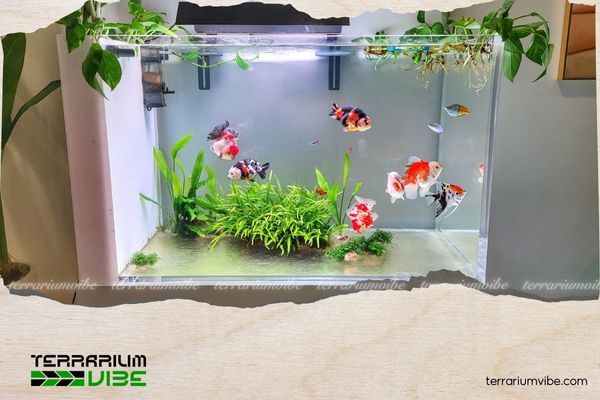
Adding Beneficial Bacteria to Aquascape Filter
Pro Tip: Incorporating air plants or greenery around the tank can enhance the ambiance and help regulate humidity. This, in turn, creates a more supportive environment for beneficial bacteria to thrive—indirectly contributing to clearer water.
3. Pay Attention to Your Water Source
Water quality is often overlooked, but it plays a crucial role in both the stability of your ecosystem and the clarity of your tank. If your water source contains chlorine, heavy metals, or has unstable pH, it could negatively impact both aquatic life and microbial health.
- If you’re using tap water for your aquarium, it’s important to remove chlorine and chloramine, as they can harm fish and beneficial bacteria. You can do this by adding an aquarium-safe water conditioner or by letting the water sit uncovered for 24–48 hours to allow chlorine to evaporate naturally.
- Test key water parameters like pH, GH, and KH before filling your tank.
- Avoid using water with high iron content or stagnant water from tanks or containers that haven’t been refreshed in a while.
Testing Aquarium Tap Water Quality
At Terrarium Vibe, we hope these insights help you confidently tackle cloudy water in your newly set up aquascape. Addressing the issue early not only speeds up tank stabilization but also lays the foundation for a vibrant, balanced aquatic ecosystem.