



A Simple Guide on How to Calculate Aquarium Volume – Perfect for Beginners

Are you just starting with planted tanks and unsure how to calculate aquarium volume? Don’t worry—Terrarium has you covered. In this guide, we’ll show you exactly how to calculate your aquarium’s water volume step by step, tailored to each tank shape. We’ll also explain why this is a critical part of aquarium care.
Why It’s Important to Know Your Aquarium’s Volume
Accurately calculating your aquarium’s water volume offers several key benefits, especially if you’re new to the hobby:
- Choose the right equipment: Your tank’s volume determines the appropriate capacity for filters, heaters, lighting systems, and more. If your equipment is underpowered or oversized, it can destabilize your aquatic environment.
- Does precisely: Fertilizers and medications are dosed based on liters. Misjudging volume can harm your fish or Terrarium plants.
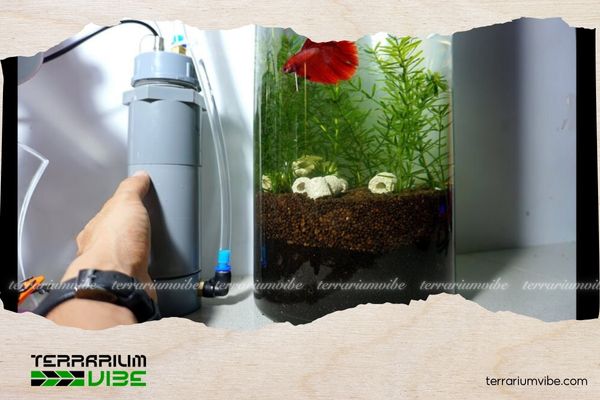
Benefits of Calculating Aquarium Volume
- Change water efficiently: Knowing your tank volume allows you to determine exactly how much water to change during routine maintenance.
- Manage your ecosystem better: Volume helps you balance the number of plants and fish, optimizing layout and system health.
How to Calculate Aquarium Volume (By Tank Shape)
To calculate water volume accurately, you need to measure the internal dimensions of the tank (not including the glass thickness or trims). The formula varies depending on the tank’s shape:
For Rectangular (Box-Shaped) Tanks
This is the most common shape. Use this simple formula:
Volume (liters) = (Length × Width × Height in cm) / 1000
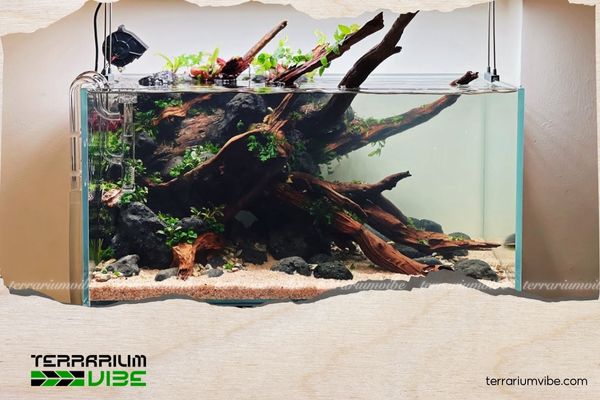
How to calculate aquarium volume of a Box-Shaped Aquarium
Example: A tank measuring 60cm (L) × 30cm (W) × 40cm (H):
→ Volume = (60 × 30 × 40) / 1000 = 72 liters
For Cylindrical or Round Tanks
Use this method:
Base Area (cm²) = π × Radius² (π ≈ 3.14)
Volume (liters) = (Base Area × Height) / 1000

How to calculate aquarium volume for Cylinder-Shaped Aquarium
Example:
Tank with a diameter of 40cm and a height of 50cm → radius = 20cm
→ Volume = (3.14 × 20² × 50) / 1000 = 62.8 liters
For Hexagonal Tanks
For tanks with a regular hexagon base:
Base Area = (3√3 / 2) × Side²
Volume (liters) = (Base Area × Height) / 1000

How to calculate aquarium volume for Hexagon-Shaped Tanks
Example:
Hexagon with 20cm side length and 40cm height:
→ Base Area = (3 × 1.732 / 2 × 20²) = 2598.4 cm³
→ Volume = 2598.4 × 40 / 1000 = 103.9 liters
Tip for Irregular Shapes: How to calculate aquarium volume for custom or irregular tanks? You should break them down into basic shapes (boxes, cylinders, etc.), calculate each part’s volume, and sum them up. This gives you a close estimate.
Things to Keep in Mind When Calculating Aquarium Volume
Even though the math is simple, accuracy matters. Here are a few important notes:
- Measure internal dimensions only: Exclude the glass frame and trims. Only measure the area that holds water.
- Use consistent units: Stick to centimeters throughout your calculation to avoid errors.
- Actual water height: If you don’t fill the tank to the top, calculate based on your real water level.
- Subtract for decorations: Rocks, driftwood, and substrate take up space, meaning the actual water volume is slightly less.

Tips for Accurate Aquarium Volume Calculation
We hope this detailed guide from Terrarium has helped you confidently understand how to calculate the volume of your planted aquarium. Knowing your tank’s exact volume will give you greater control over water quality, equipment choices, and ecosystem balance, whether you’re just starting or refining your setup.