



Everything you need to know to set up a stunning, creative rock-style aquascape – say goodbye to boring tanks

Rock layouts have always been a top choice for creating visually striking aquascapes. Whether you’re just starting out or already an experienced hobbyist, arranging stones in a harmonious and eye-catching way remains a fun and rewarding challenge. In this guide, Terrarium Vibe reveals everything from A to Z to help you build a unique, one-of-a-kind aquascape. Let’s dive in!
Core principles of rock layout aquascaping
Rock-based layouts—like Iwagumi or Nature Aquarium styles—are among the most beloved in the aquascaping world. But to create a balanced, long-lasting tank, it’s crucial to follow some fundamental rules:
1. Choose the right type of rock
Use inert rocks that won’t alter your water parameters, such as Seiryu stone or lava rock. Opt for stones with natural shapes and varied sizes. The main stone (oyaishi) should be the largest—roughly two-thirds the height of your tank. Supporting stones (fukuishi, soeishi) should gradually decrease in size to create visual hierarchy.
2. Apply the rule of thirds
Create a natural focal point by placing your main stone off-center, typically around one-third of the tank’s length. Position all stones to lean in the same direction to suggest flow and motion. Avoid symmetry and leave negative space between rocks for a more dynamic, open layout.
3. Layer your scape clearly
Use small rocks and low-growing plants in the foreground, medium rocks and mid-height plants in the midground, and large stones or rock clusters with tall plants in the background. This structure adds depth and visual interest.
4. Pay attention to lighting
Angling the light source at 45 degrees casts dramatic, artistic shadows that enhance the overall composition. Combine this with weekly 30% water changes to maintain a stable environment and prevent algae growth.
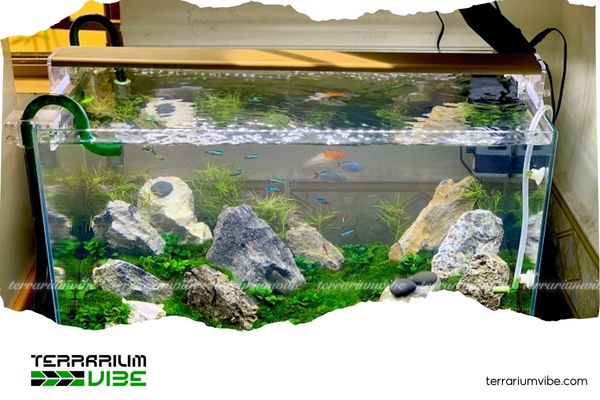
Core principles of rock layout aquascaping
Step-by-step guide to setting up a rock-based aquascape
Creating a rock-style aquascape is simpler than it looks when you follow these key steps:
- Select and arrange inert stones (like Seiryu or lava rock), positioning the main cluster off-center using the rule of thirds
- Build a sloped substrate from back to front (around 5 cm in the back tapering to 2 cm in the front)
- Plant aquarium plants: attach mosses or Anubias to rocks, and plant carpeting species like Hemianthus Cuba in the foreground
- Slowly fill the tank with water, then install your lighting and filtration system
- Add livestock (fish/shrimp) after cycling the tank for 1–2 weeks
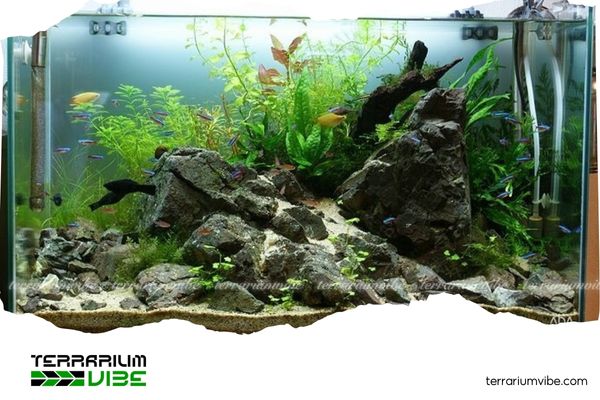
Step-by-step guide to setting up a rock-based aquascape
Best aquatic plants for rock layouts
Rock layouts often embrace a minimalist or nature-inspired aesthetic, so it’s important to choose plants that complement the stonework. Here are top picks for each zone:
- Epiphyte plants (attach to rocks): Anubias, Bucephalandra, Java fern
- Foreground carpeting plants: Monte Carlo, Glossostigma, Eleocharis parvula
- Midground/background plants: Weeping moss, Java moss, Rotala rotundifolia, Myriophyllum mattogrossense

Best aquatic plants for rock layouts
Pro tips:
Choose slow-growing species to minimize trimming. Avoid nutrient-hungry plants if using inert rocks. Keep the overall palette green with subtle red or purple accents from Buce or Rotala for a balanced look.
Common rock layout mistakes and how to fix them
Rock aquascaping looks simple—but it’s easy to go wrong without a clear plan. Here are common beginner mistakes and how to avoid them:
- Symmetrical layout, no focal point
– Rocks placed too evenly make the scape look artificial.
→ Use one dominant stone placed off-center to draw the eye. - Flat substrate
– Creates a “boxy,” shallow feel.
→ Add slope from back to front to open up space. - Mismatched rocks
– Different textures or colors can look messy.
→ Stick to a single rock type with consistent tones and patterns. - Unprepared rocks
– Can cause cloudiness or hardness spikes.
→ Always rinse and soak rocks before placing them in the tank. - Plants covering the rocks
– Hides your carefully designed layout.
→ Use low-growing or moss-type plants and trim regularly. - Overcrowded tank
– Clutter ruins the minimalist effect.
→ Leave negative space to make the layout breathe. - No plan
– Leads to messy or disjointed results.
→ Sketch out your composition before starting the build.
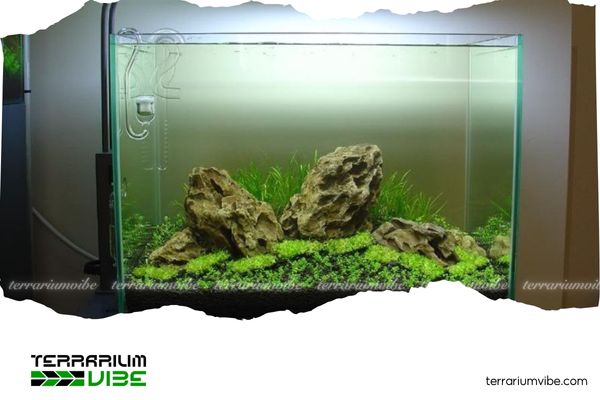
Common rock layout mistakes and how to fix them
With these expert tips from Terrarium Vibe, you’re now ready to create your very own rock-style aquascape—a living masterpiece that reflects your personal style. Good luck, and may your aquascaping journey be filled with creativity and joy!